
Hamstring strains and tears: What You Need to Know
What is a hamstring strain?
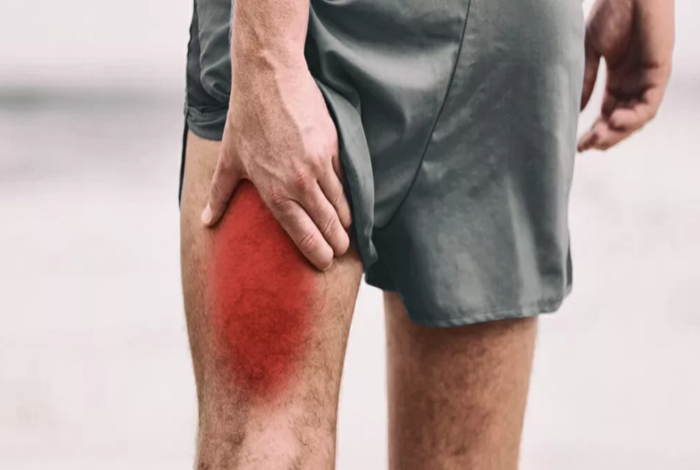
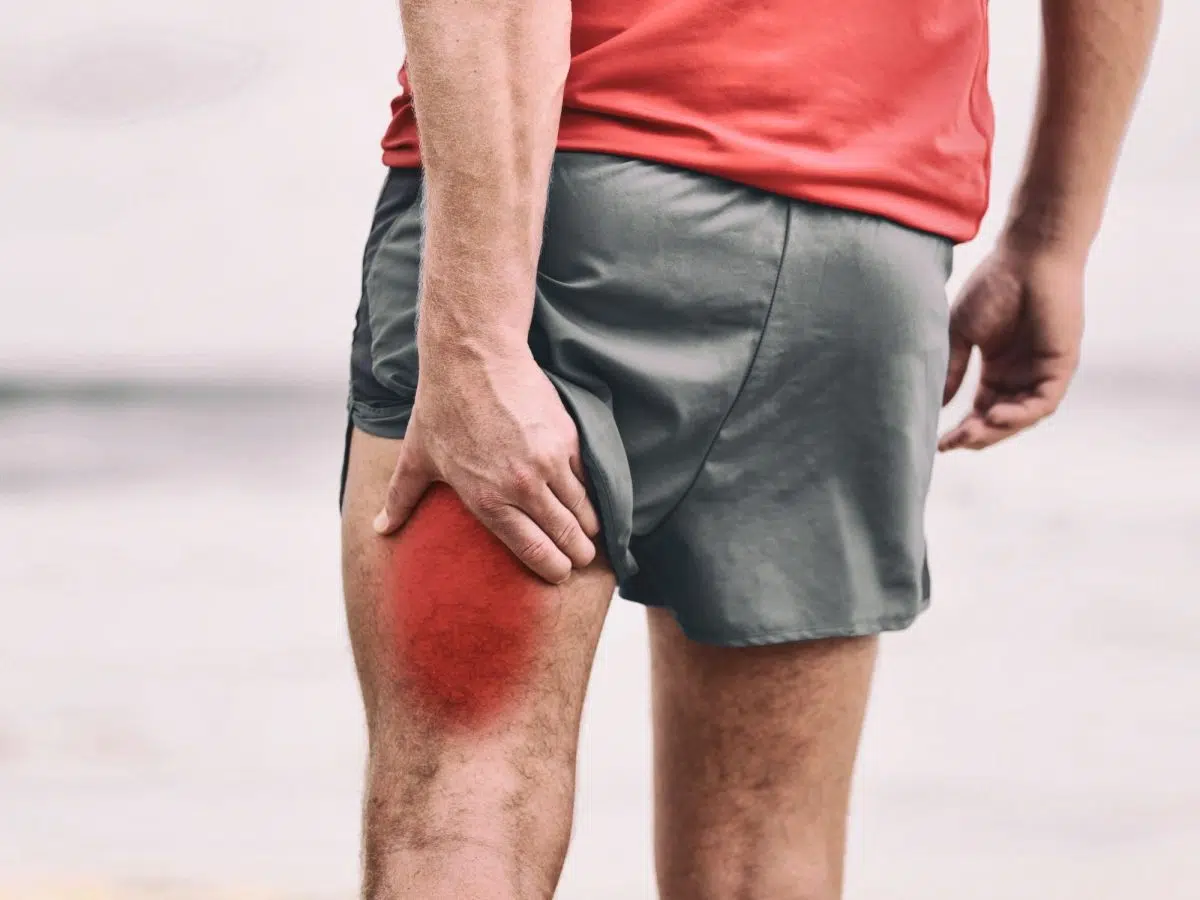
A hamstring strain is an injury to one or more of the muscles at the back of your thigh. These muscles help bend your knee and control your leg when walking, running, or sprinting.
Strains happen when the muscle is overloaded—most commonly during sprinting, acceleration, or sudden stretching movements. The injury can range from a mild overstretch to a partial or more significant tear.
Common Symptoms
People with a hamstring strain often report:
- Sudden sharp or “grabbing” pain in the back of the thigh
- Pain during running, especially when trying to speed up
- Tenderness in a specific spot
- Pain when bending forward or stretching the leg
- Reduced strength or confidence in the leg
- Bruising (in more severe cases, usually after 1–3 days)
Three Grades of Hamstring Strains
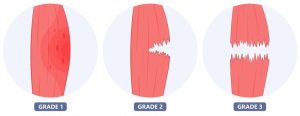
Grade 1 (Mild)
- Small number of muscle fibres affected
- Tightness or mild pain
- Minimal strength loss
- Little/no bruising
⏱️ Typical recovery:
- 1–3 weeks
Often able to keep some level of activity early, with quick progression if loaded well
Grade 2 (Moderate)
- Partial muscle tear
- Clear pain and weakness
- Difficulty running or accelerating
- Possible bruising/swelling
⏱️ Typical recovery:
- 3–6 weeks (sometimes longer depending on location)
Needs structured rehab, especially rebuilding strength in lengthened positions and progressing running
Grade 3 (Severe)
- Large tear or complete rupture
- Significant weakness or loss of function
- Often visible bruising
⏱️ Typical recovery:
- 6–12+ weeks
- Longer if tendon involved or surgery required
Do I need a scan?
Most hamstring strains do not need imaging (like MRI or ultrasound), especially early on.
Imaging may be considered if:
- The diagnosis is unclear
- There is severe pain, significant weakness, or difficulty walking
- A proximal tendon injury (high hamstring) is suspected
- You’re an athlete where return-to-play timing is critical
For the majority of people, clinical assessment and rehab progress guide management better than a scan.
Early self-care tips (first few days):
The goal early on is to protect the muscle without completely resting it.
✔️ What helps:
- Keep moving within comfort (short walks are usually okay)
- Avoid sprinting, fast movements, and deep stretching
- Try gentle isometric exercises (holding light contractions)
- Use ice if it helps pain (optional—not essential)
❌ What to avoid:
- Aggressive stretching early
- Complete rest for days
- “Pushing through” sharp pain
A common mistake is either doing too much too soon or not enough at all—both can slow recovery.
What Actually Helps?
Evidence-based treatment includes:
The strongest evidence supports a progressive loading program, not passive treatments.
Key components:
- Gradual strengthening
- Start with simple exercises (e.g. bridges)
- Progress to heavier and single-leg work
- Eccentric training
- Exercises where the muscle lengthens under load (e.g. Nordic hamstrings)
- Important for reducing reinjury risk
- Training at longer muscle lengths
- Gradually loading the hamstring in stretched positions
- Return to running
- Start with slow jogging
- Progress to faster running and eventually sprinting
- High-speed exposure
- This is critical—most reinjuries happen when people return to sport without rebuilding sprint capacity
Passive treatments (massage, dry needling, etc.) may help symptoms but don’t replace strengthening and loading.
Basic Recovery Timelines
These vary depending on severity and location, but as a rough guide:
- Mild strain: 2–3 weeks
- Moderate strain: 3–6 weeks
- More severe injuries: 6–12+ weeks
Importantly, recovery should be based on function and strength, not just time.
When to Seek Help
It’s worth seeing a physio or GP if:
- You’re limping or unable to walk normally
- Pain isn’t improving after 1–2 weeks
- You’ve had repeated hamstring injuries
- Pain is high up near the sitting bone (possible tendon involvement)
- You’re unsure how to safely return to activity
Early guidance can help prevent the injury becoming persistent—or recurring.
Takeaway message
Hamstring strains are common and very recoverable—but they need the right kind of loading.
- Rest alone isn’t enough
- Strength (especially eccentric and lengthened) is key
- Sprinting needs to be rebuilt before full return to sport
👉 If you get the rehab right, you’re not just recovering—you’re reducing the chance of it happening again.
How we help:
At Livfit Physio Mornington (207 Dunns Rd), you’ll receive:
- A clear diagnosis
- Identification of hamstring strain grade and presentation
- A tailored rehab plan that fits your pattern and your daily tasks
- Hands-on treatment when appropriate
- Guidance on exercise and load management
- Coordination with your GP for imaging or medication when needed
Book an appointment:👉 Online bookings: https://livfitphysiomornington.com.au/make-a-booking/👉 Clinic: 207 Dunns Rd, Mornington VIC 3931