

Ankle Sprains: What You Need to Know
What is an ankle sprain?
An ankle sprain is one of the most common musculoskeletal injuries. It occurs when the ligaments around the ankle are stretched or torn, usually
after the foot rolls inward (called an inversion injury).
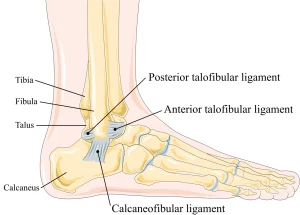
The most commonly affected ligaments are on the outside of the ankle, particularly:
- ATFL (anterior talofibular ligament)
- CFL (calcaneofibular ligament)
These ligaments help stabilise the ankle during walking, running, and change of direction.
Common Symptoms:
- Pain on the outside of the ankle
- Swelling (often rapid)
- Bruising over 24–48 hours
- Difficulty walking or weight-bearing
- Feeling of instability or “giving way”
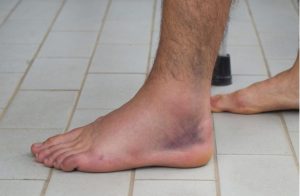
In more significant sprains:
- Marked swelling
- Trouble putting weight through the foot
- Reduced range of movement
Do I need a scan?
Not every ankle sprain needs a scan.
Clinically, we often use the Ottawa Ankle Rules as a guide.
You may need an X-ray if:
- You can’t take 4 steps after the injury
- There is bone tenderness at:
- The outer ankle (lateral malleolus)
- The inner ankle (medial malleolus)
- Base of 5th metatarsal
- Navicular bone
Imaging may also be considered if:
- Pain is not improving after 1–2 weeks
- There is ongoing instability
- Suspicion of more complex injury (e.g. syndesmosis injury)
Most simple ankle sprains do NOT require imaging early
.
Early self-care tips (first few days):
First 24–72 hours
- Relative rest (avoid aggravating activities, but don’t fully immobilise)
- Ice for pain relief (15–20 mins)
- Compression (bandage or brace)
- Elevation when possible
Think: “protect, but don’t completely stop moving”
Early movement matters
- Gentle ankle movements (up/down, not circles)
- Gradual return to walking as tolerated
Complete rest for too long can actually slow recovery
What Actually Helps?
Evidence-based treatment includes:
- Early mobility
- Restore ankle movement
- Prevent stiffness
- Strength training
- Calf raises
- Resistance band work
- Balance & proprioception
- Single leg standing
- Progressing to unstable surfaces
- Gradual return to activity
- Walking → jogging → sport
- Based on symptoms, not just time
Basic Recovery Timelines
- Mild: 1–2 weeks
- Moderate: 3–6 weeks
- Severe: 6–12+ weeks
Many people return to activity too early, which increases re-injury risk
When to Seek Help
- Unable to walk normally
- Significant swelling or bruising
- Recurrent ankle sprains
- Ongoing pain or instability
Takeaway message
Ankle sprains are common, but how you manage them early makes a big difference to recovery and long-term stability.
With the right rehab, most people recover well—but without it, the risk of chronic instability and repeat injury is high.
How we help:
At Livfit Physio Mornington (207 Dunns Rd), you’ll receive:
- A clear diagnosis
- Identification of ankle sprain grade and presentation
- A tailored rehab plan that fits your pattern and your daily tasks
- Hands-on treatment when appropriate
- Guidance on exercise and load management
- Coordination with your GP for imaging or medication when needed
Book an appointment:
👉 Online bookings: https://livfitphysiomornington.com.au/make-a-booking/
👉 Clinic: 207 Dunns Rd, Mornington VIC 3931